
Mumbai
For long time I was thinking of visiting Mumbai properly. It isn’t that I haven’t been to Mumbai but it was mostly a day…
Read More Traveling is good
For long time I was thinking of visiting Mumbai properly. It isn’t that I haven’t been to Mumbai but it was mostly a day…
Read More
We started by 9 AM from Tapola and had to pass through Mahabaleshwar. We reached Pratapgarh by 11 AM and it already had a…
Read More
KAAS Pathar (means Plateau) is an area in Satara district of Maharastra famous for flowers which bloom during monsoon around August-September. The place is around…
Read More
In the long weekend of 2nd Oct we decided to go nearby places which we haven’t been to yet. Satara is a district close…
Read More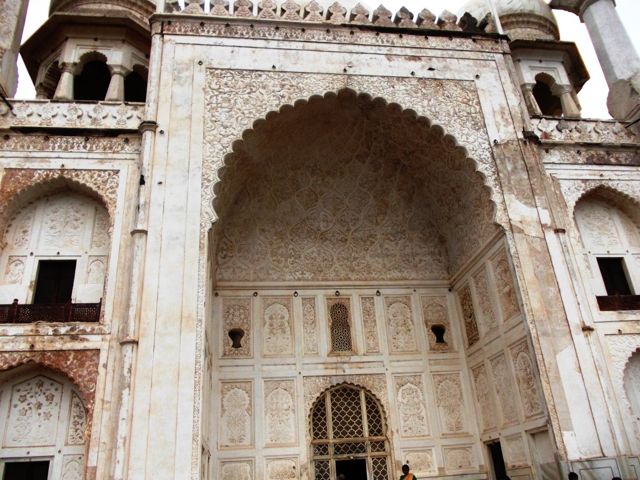
Bibi Ka Maqbara is situated about 5 kms from the Aurangabad city, the burial place of Aurangzeb wife, Rabia-Durrani. It is an imitation of the Taj Mahal at Agra; it is also called as “poor man’s Taj Mahal” owing to it being a poor replica of the Taj. Behind the tomb is located a small archeological museum.
The comparison with the Agra monument has unfortunately somewhat degraded the Aurangabad tomb which in itself displays a worthwhile architectural design, with much distinguished surface ornamentation in the late Mughal style.
The tomb dates from 1678 and it was erected by Prince Azam Shah, one of Aurangzeb’s sons, in memory of Begum Rabia Durani, his mother. It stands in the middle of a spacious and formally planned garden, some 457 by 274 meters, with axial ponds, fountains, and water channels, many defined by stone screens and lined with broad pathways. The garden is enclosed by high crenellated walls with fortress set at intervals, and open pavilions on three sides.
Read More
Aurangzeb funded his resting place by knitting caps and copying the Qu’ran, during the last years of his life, works which he sold anonymously in the market place. Here are also buried Azam Shah, Aurangzeb’s son, Nizam-ul-Mulk Asaf Jah, the founder of the Hyderabad dynasty, his second son Nasir Jang, Nizare Shah, king of Ahmednagar, Tana Shah, last of the Golkonda kings and a host of minor celebrities.
Read More
It is estimated that the task of quarrying its 3,000,000 cubic feet of rock must have occupied at least one hundred years. It is wonder to see so great a mass in the air which seems so slenderly under-dropped that could hardly forbear to shudder on first entering it. There is no nobler achievement of the Indian architects and sculptors, and no greater marvel of Indian sculpture.
Read More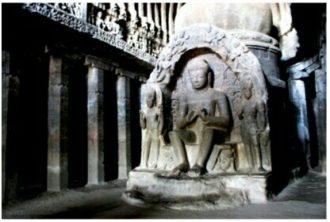
The caves excavations are on a sloping hill side. They are spread over an area, from North to South, of about two kilometers. All caves are west facing. These are maintained by ASI and have an entry ticket of Rs.10 for Indians.
Read More
According to Dwadasha Jyotirlinga Stotram, there are twelve Jyotirlings in total and Grishneshwar Jyotirling is considered to be twelfth. This is located at a village called Verul, which lies 35 km from Aurangabad in Maharashtra and approximately 100 kms from Manmad station.
Read More
Shani Shingnapur is perhaps the most popular place for all Shani Dev devotees. Shignapur is situated at a distance of 6 kms from Ghodegaon on Aurangabad-Ahmednagar highway. Its distance from Aurangabad is 84 kms, 75 km from Shirdi and from Ahmednagar it is 35 kms. From Ghodegaon, there is a motorable tar road up to the idol of Shri Shaneshwar and is open in all the seasons.
Read More
After five minutes, suddenly door was open and we were asked to go for darshan- as there was some delay in the Aarti. We entered from one side and have darshan and came out from another door, just opposite to entrance. After darshan we also went to Dwarkamai, Chavadi and Gurusthan. These all places are on the backside of Samadhi temple. There is also one canteen serving snacks, tea and coffee.
Read More
We were among the hundreds of hopeful Indians, boarding the ship, in search of better life and future. Since we had paid the lowest fare, we were directed to the lower deck. The cabin allotted to us had ten other passengers-all young, and we knew a couple of them. Some of them were going to Germany and France, while the rest of us were bound for London.

My wife was the only female in the lower deck. Being all of almost the same age, we got along famously. All of us first time travelers, feeling seasick. The sea was pretty rough, and the food on the ship was disappointing. But we didn’t mind. The prospect of getting to London kept us cheerful.
Aden was the first port of call. And we went around the town with other passengers. Every one wrote a postcard to their families