Madhya Pradesh

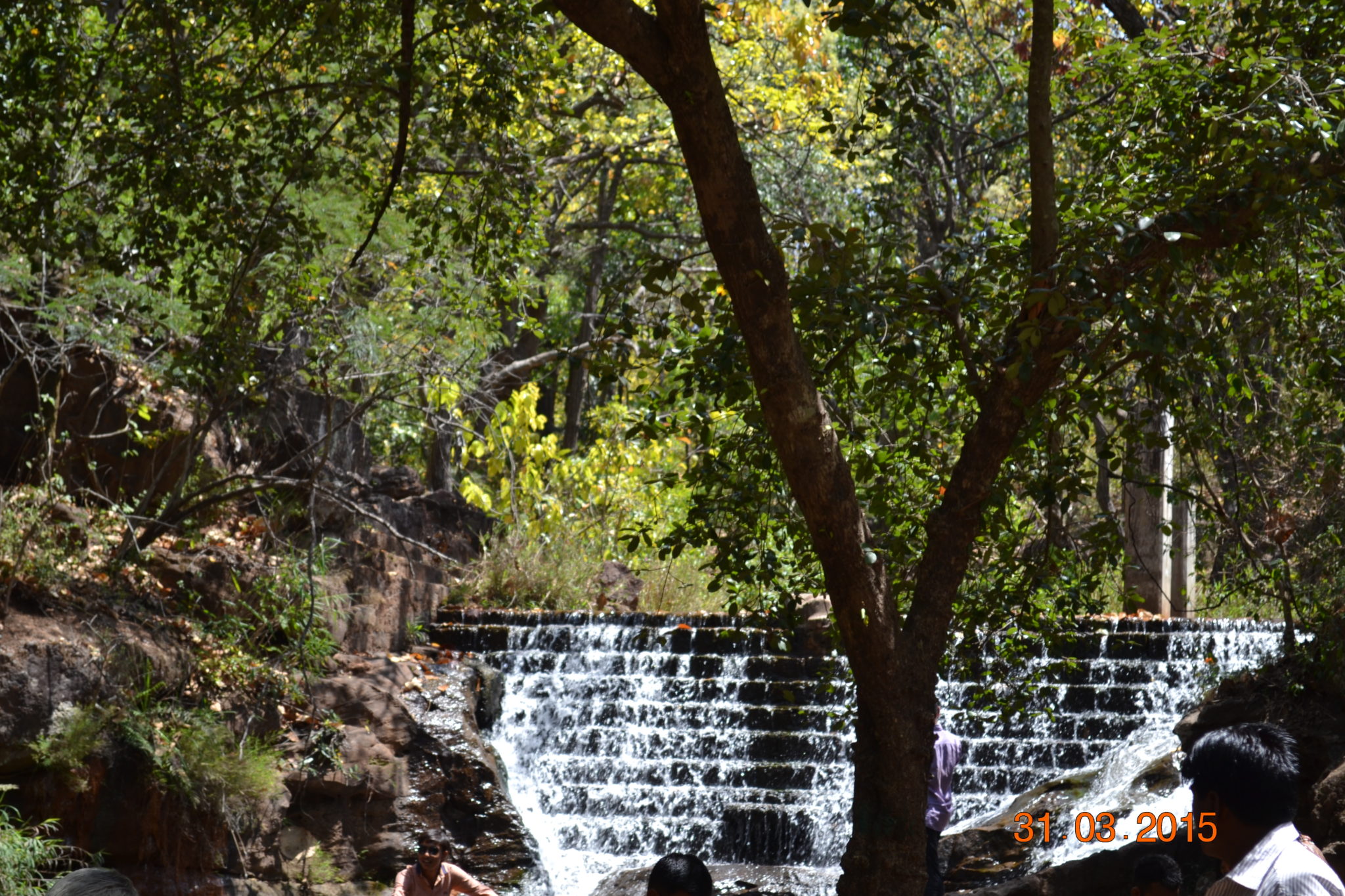
Madhya Pradesh, literally meaning the “central region” is often known as the heart of India. Endowed with rich and diverse forests, Madhya Pradesh is a reservoir of Biodiversity, the home to National parks and Natural Reserves and a watershed of a number of rivers including the Narmada and the Tapti. Madhya Pradesh’s Natural Heritage welcomes visitors to nine national parks including Bandhavgarh National Park, Kanha National Park, Waterfalls at Jabalpur, beautiful forest Eco systems and Natural Reserves such as Amarkantak, Bagh Caves and Pachmarhi Biosphere Reserve.
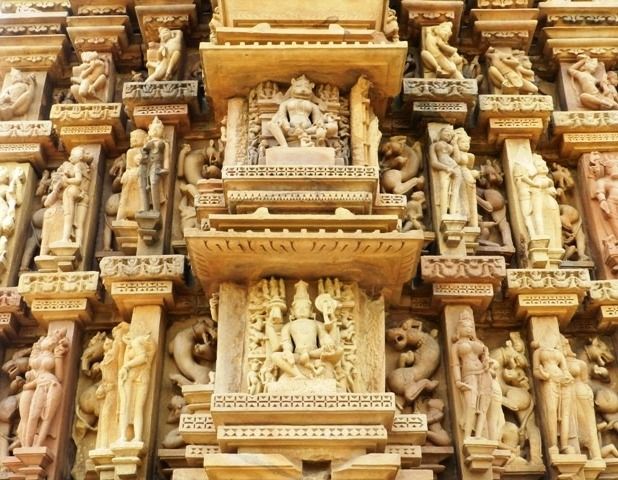
The cultural heritage of many religions is well represented in this predominantly Hindi speaking state. Innumerable monuments, exquisitely carved temples, stupas, forts and palaces on hilltops bring to mind visions of empires and kingdoms, of the great warriors and builders, poets and musicians, saints and philosophers; of Hinduism, Buddhism, Jainism and Islam. Some are the Lakshmana Temple, Devi Jagdambi Temple, The Sanchi Stupa and Masoleum on the banks of the Betwa River. The Khajuraho Group of monuments along with Buddhist Monuments at Sanchi and Rock Shelters of Bhimbetka are among declared UNESCO World Heritage Sites.
Madhya Pradesh has an extensive railway network and a good road network connecting almost all parts of the state. The state has two international airports, one in Indore and another in the state capital Bhopal and three domestic airports at Gwalior, Khajuraho and Jabalpur. The climate is characterized by hot and dry summers, a varied rainy season over different parts of the state and pleasant winters.

Hindustan Ka Dil Dekho (M.P. Trip) – Part 3

By

I would suggest taking the upper deck ticket (which is cheaper) instead of lower one, as it gives you a better view with open space. It was approx. one hour ride, which was full of fun and masti, people started dancing on the floor, and kids were enjoying the cruise experience. The view around was extraordinary, and we felt like lost in the sea. Total paisa vasool, one should not miss this in Jabalpur for sure.

Read More

Wild and Historical Bundelkhand – Raneh Fall & Khajuraho

By

The Khajuraho Group of Temples are reportedly constructed during 10th& 11th century by the Chandelas and dedicated to the Hindus & Jains. Most of the temples are constructed by hard sedimentary rocks and erected in an advanced geometrical technology avoiding cementing mortars. A few are constructed by granites too. This was perhaps to enhance the longevity and religious faiths. The architecture is “Nagara-Style†and rock cut sculptures are similar to wooden carvings during the earlier ages. The intricately expressive figures and designs are profusely available in all the structures. It is believed that there was originally 85 temples constructed around 25 km out of which only 25 survived within 6 km now. They are divided in three zones viz. Western Group, Eastern Group & Southern Group. A brief of these exquisite temples are compiled herewith for reader’s delight.

Read More

Wild and Historical Bundelkhand – Ajaigarh Fort, The forbidden Kingdom

By

The landscape around the lake is astounding but heartening simultaneously. Hundreds of very well sculpted rocks, some of which still in better shapes were lying scattered at the lake side and around. A huge round sculpted “Amalaka†(the stone disk/rim fitted atop a temple) is an eye catcher, depicting pathetic demise of its glorious past. The invaluable chiselled rocks and the sculpted remains of a temple were once an integral part of an exotic masterpiece, perhaps as good as the marvels in Khajuraho. Can it be restored now! Sadly, no or not to its original shape.
Descending through the broken stepsand balancing cautiously we reached at an open balcony. An alley of beautiful rock carvings and finely chiselled rock figures of different deities and symbolic, made the sweating effort worth.

Our next hunt was the hidden gems in the jungle at Ajaigarh. Our prime reason to visit the fort was to see those exclusive Khajuraho style Jain Temples in the forest. After some rest&normalising the respiration, we again started our stroll & soon reached a fenced arena. Our guide gestured to say, here is the Jain Temples. Where! In the woods we could havea glimpse of the structures only on reaching close enough.

Read More

Wild and Historical Bundelkhand – Panna Tiger Reserve & Khajuraho at Night

By

Waiting was a waste so we reached at the other site where a tigress with her cubs was reportedly roaming on the other bank of Ken. The river snakes inside the entire forest adding mystical beauty on one side and the Vindhya Range of hills on the other side, enhancing the charm naturally. A team of National Geographic was camping with sophisticated equipment of photography. Waiting patiently in silence & clicking at times mysteriously, I understand they were filming the tigress and the cubs. I tried to aim my 50x imitating their style on the same direction but could find nothing but rocks and bushes till infinity. In 10 mins I was restless and gave-up. Those guys were still on job and may remain there for months, as informed. Not our cup of tea. We may enjoy watching, if anything they will produce in their channel some day at the leisure of our cosy living rooms or bedrooms.
Down thereafter, we stopped at the banks of Ken River where one can enjoy boating in the wild with occasional sighting of Gharials. Boating in the serene landscape was experimental but the weather didn’t support & soon it was dark & started raining heavily.

Read More

Hindustan Ka Dil Dekho (M.P. Trip) – Part 1

By

After having good time watching all above, we moved to the left side of the premises, to see if there was anything left. And there found a small handicraft shop, a tiny farm where white pigeons, rabbits and ducks are being kept and an astonishing view point, from where we could see whole of Sanchi’s wheat fields. It was completely mesmerizing.

Read More

Ancient temples of Jabalpur

By

Observing the steps and the facilities there, an interesting question cropped up in my mind. “Have we become weaker and more complacent that our counterpart who lived and constructed such temples?†Or, in other side of it, “Are we more caring than our counterpart who lived and constructed such temples?â€

Read More

A Magic in Marbles : Bheda Ghat in Jabalpur

By

After the boat turned right, the guide indicated towards some rocks of white marble that were having small pores/holes on their outer surface. He narrated the story of the shooting of the scene of gun-battle between two Bollywood heroes of yesteryears. The heroes were shooting at each other from opposite sides of the rivers and the bullets had dented the marble. Everybody was convinced by the story and hummed as a token of their acceptance of that theory.

Read More

A rendezvous with Narmada: Dhuandhar Fall at Jabalpur

By

Sometimes, when you are too passionate about something, one gets a shock when the reality strikes suddenly. Deeply enamoured in love with the river, when I was approaching it, the reality of people struck me with deep sense of sorrow. I saw the poor children standing in the waves and searching for the coins which devotees throw in the water. I stood there for a while and wanted to ask those children about their reasons to do the same and to convince them about the risks that are generally associated with such activities in the middle of a raving water flow. However, after pondering over the situation, I desisted from entering into any kind of dialogue with those children, numbering around fifty. It was the example of extreme penury striking me with a reality check and shaking my conscience. All recent events of displacement of tribals during Bargi Dam and Sardar Sarovar Project revolved around my memory and I stood there dumbstruck. The modern day reality was mean and much beyond the well-meaning words of “Dakshin Ganga†and “mekal-kanya†etc.

Read More

A Brave Queen: Rani Durgawati (Jabalpur, M.P.)

By

As it happens, when God takes away something, it gives something to bank upon. The queen also had some of the most trustworthy lieutenants to manage the affairs of the kingdom. I also found an old temple of Mata Sharda near the fort. In fact, it was situated just at the base of the hill. Somehow, I thought that Goddess Sharda gave immense strength to our queen to take up the responsibility while re-building her own life with the growth of her son, who was known as “Veer Narayanâ€. Due to safety reasons, the queen had also shifted her base to Chauragarh.

Five more years passed under the rule of queen bringing a sense of normalcy in the kingdom. Then, the destiny struck again in 1556 AD, the independent sultan of Malwa (Present day Mandu) crossed the distance of 650 kilometres and attacked the Queen thinking that he would not be met with any resistance. But, he was proved wrong. Even though, our queen was fighting her first battle, she came out victorious. Baz Bahadur had to run away for his life.

Read More

An example of determination: Pisanhari ki Marhiya (Jabalpur)

By

The competition gradually became tougher and louder till there was a total din. Amidst the chaos, looking at the prospects of not being able to find a clear-cut winner, the challenge-competition was halted in the middle. In that interlude it was the perfect time for telling the story of an old woman, who lived alone in a hut at Jabalpur about 650 years ago.

Read More

A temple in Nation’s defence: Pat Baba (Jabalpur)

By

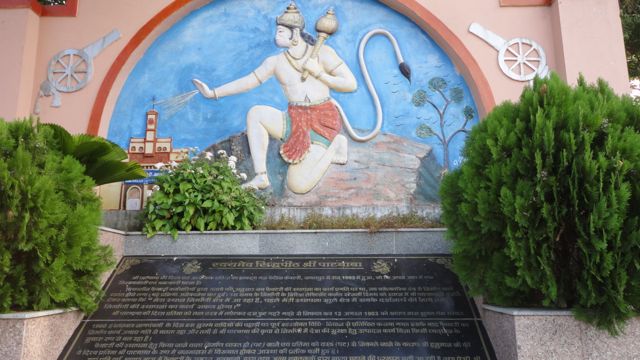
Next morning, when his men would have assembled to start the construction again, Colonel Smith shared his dream with them. In their collective despair arising from unsuccessful attempts at building the factory, they would have decided take a chance with the dream and started to dig out the ground to retrieve the idol. I have no idea how they would have searched and found the exact place for digging. Either they would have tried at different places all over the premises or would have taken the help of some wise men who could sense the presence of any heavy object beneath the ground.

Next few days, the construction of the factory was stopped. Instead there were hectic activities in search of the idol. Finally, after a massive search and digging below the ground, the idol of Lord Hanuman was found. It must be a joyous moment not only for all the workers but also for the officers, especially Colonel Smith. He must have run to the site from his tent to see the last stages of the recovery of the idol. He must not have believed his eyes on what he would have seen. The dream that he saw was becoming a reality. Standing in front of the trench, he would have gone through the plethora of emotions ranging from disbelief to happiness and further to extreme sense of faith.

Read More