लखनऊ का इमामबाड़ा और शाही बावली की घुम्मकड़ी
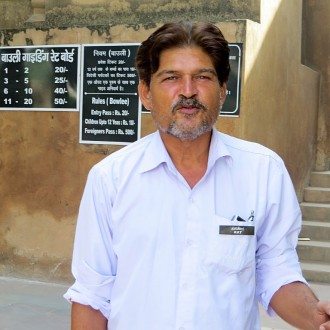
इमामबाड़े की दूर तक फैली सीढ़ियां तथा बाईं ओर शाही बावली और दाईं और नायाब मस्जिद के चित्र तत्कालीन वास्तुकला की भव्यता का सजीव चित्रण कर रहे थे. मैंने जूते उतारकर इमामबाड़े …
Read More Traveling is good
इमामबाड़े की दूर तक फैली सीढ़ियां तथा बाईं ओर शाही बावली और दाईं और नायाब मस्जिद के चित्र तत्कालीन वास्तुकला की भव्यता का सजीव चित्रण कर रहे थे. मैंने जूते उतारकर इमामबाड़े …
Read More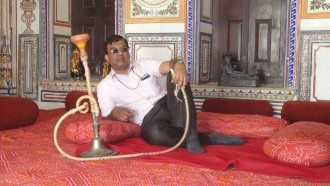
Such passenger-carts had generally flat open surfaces on top so as to accommodate many passengers. I can think of only one plausible reason for such open carts, which can be attributed to the basic structure of our rain-based agrarian economy. As the people were busy during the rainy season, it prevented the mass from travelling from one place to the other in that season. But, just for the sake of fun, let’s imagine the scene of a drawing room of any transporter of 18th-19th Century. Their discussions on selecting the best model of the passenger-carts might have revolved around the durability of their design, availability of open space for carrying more number of people with their respective luggage and the probable cost of travel.
The bigger challenge, however, is to guess the complex mechanism of pricing their so-called “tickets”. How to fix the charge or the cost of travel, when the eating habits and the quantity of edible food of the animal differed from one transporter to another!
Read More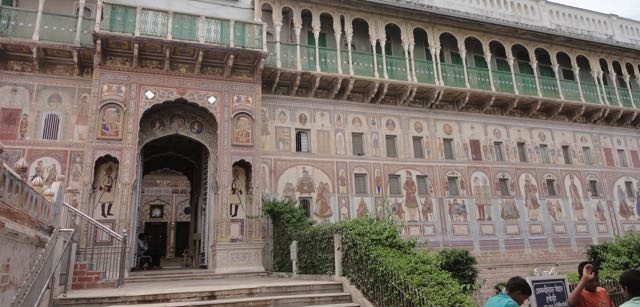
In medieval period, the inhabitation in Shekhawati was in the form of walled cities having gates at different directions. The role of the ruling royalty was to give protection to the citizen living under their dominions. Similarly, the role of the business families was to trade and pay taxes to the royalty for the maintenance and protection of the cities. However, the administrative structure was changing fast.
Read More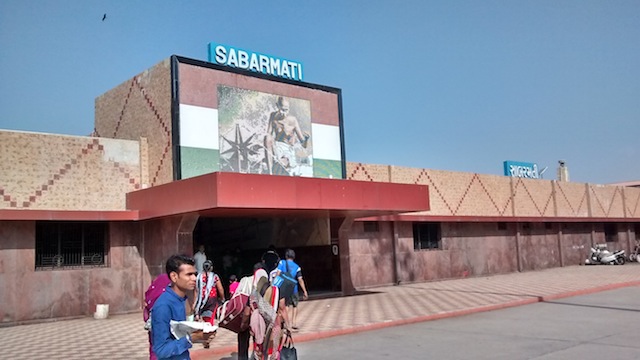
स्टेशन के प्लेटफार्म नंबर दो पर मैं रणकपुर एक्सप्रेस का इंतज़ार कर रहा था जो समय से आधा घंट ही लेट थी (थैंक गॉड) | मेरे साथ कुल 10 सहयात्री रहे होंगे जिसमे से एक 4-5 स्टूडेंट्स का ग्रुप था | मैं अकेला बैठ सोच ही रहा था की किसी से कुछ वार्ता वगैरह शुरू की जाये तो समय पास हो पर सामने के जीआरपी रूम के खुले दरवाजे से एक पुलिस वाले द्वारा एक पतले दुबले युवक को पीटने की झलक मिली | अब किसी को ट्रेन की फ़िक्र नहीं रही और सभी लोग भिन्न भिन्न एंगल बनाकर दृश्य को देखने की कोशिश करने लगे |
Read More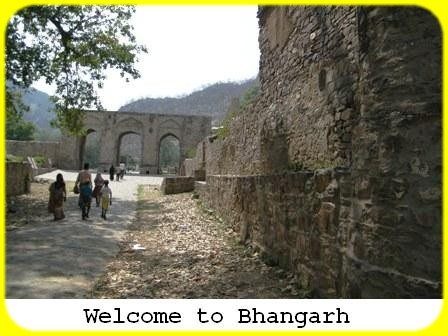
Part I was about mysteries of Bhangarh Fort – based on prevalent notions (online and otherwise), which have endeared a relatively unknown Bhangarh to…
Read More
The Aravallis cut across Jaipur and Sekhawati regions in North Rajasthan. The climatic conditions in the region are very harsh and extreme, ranging from sub-zero Celsius in winter to more than 50°C in summer. People of this region are known for their bravery and hard work and it is a fertile breeding ground for Jawans in Indian Army! Two districts of modern day Rajasthan, i.e. Jhunjhunu and Sikar can administratively be considered as the constituents of “Sekhawati” region. However the Churu district is equally important as the Sekhawati dialect is also spoken here and famous painted Havelis and Forts are omnipresent in all these three districts. The Haveli was to Banias, what the Fort was to Rajputs, an abode.
Read More
Mr. Polu, fifteen years ago, was an auto driver who helped the tourists around the Jaisalmer town. His warm and helpful nature always made the tourists stay with him. During off-season, one French couple visited Jaisalmer and he chauffeured them. They asked him, what would be his plan for the future? His simple answer was that ‘I want to own and run a hotel’. That couple didn’t buy a property for him, but searched a guest house for him. Gave $2000 as a security deposit for that property and asked Mr.Polu to run that and asked him to carry on his friendly nature.
Read More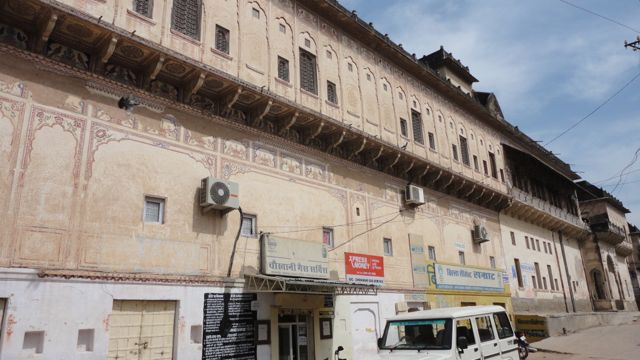
It was gradually becoming more interesting. Though the guide could address many of my curiosity, I was still left with one more. I knew that 150-200 years ago, the motorized transportation had not begun with full swing. People used to travel on foot, on dolis, on animals etc. So, I wanted to know about their provisioning in the havelis.
“Where did they keep their horses, carts and elephants? And what were the facilities for their maintenance?” I asked. My guide took me to an open space, adjacent to the main mansion. It was the place for facilities like keeping domestic animals. There were also the rooms for servants or animal-keepers. This area was also equally decorated with frescoes. There he said, “This is called “नोहरा”. It was here they kept their cattle and other domestic animals. The means of transport like horse-carts or camel-carts were also kept here only.”
Read More
In last post of this series I had described you about our visit to various temples of Haridwar which we had left last day…
Read More
I would suggest taking the upper deck ticket (which is cheaper) instead of lower one, as it gives you a better view with open space. It was approx. one hour ride, which was full of fun and masti, people started dancing on the floor, and kids were enjoying the cruise experience. The view around was extraordinary, and we felt like lost in the sea. Total paisa vasool, one should not miss this in Jabalpur for sure.
Read More
I feel that water harvesting was the most important aspect of the life in Shekhawati. Mainly three methods were used to harvest the rainfall. They constructed ornamental well near their locality to collect the water underneath the surface of the earth. They also constructed Step-well (bawri) to collect more water partly above the earth surface and partly underneath. Thirdly, they used to construct Johara, which was an alternate of artificial pond. The following picture of Johra was taken near Fatehpur.
Read More
In the last post of this series I had narreted how we arrival to Haridwar and performed Ganga Snan at Har Ki Pouri. Now…
Read More